Was Peter telling porkies?

The other day we were looking at Luke 18 with a group of young people and it was questioned if Peter was telling a lie about how much he had given up as after Jesus had died he returned to his boats and fishing, and this source of income and resource was still available to him.

The other week with a group of young people we were looking at Like 18 18 A certain ruler asked him, “Good teacher, what must I do to inherit eternal life?” 19 “Why do you call me good?” Jesus answered. “No one is good—except God alone. 20 You know the commandments: ‘You shall not commit adultery, you shall not murder, you shall not steal, you shall not give false testimony, honor your father and mother.’ 21 “All these I have kept since I was a boy,” he said. 22 When Jesus heard this, he said to him, “You still lack one thing. Sell everything you have and give to the poor, and you will have treasure in heaven. Then come, follow me.” 23 When he heard this, he became very sad, because he was very wealthy. 24 Jesus looked at him and said, “How hard it is for the rich to enter the kingdom of God! 25 Indeed, it is easier for a camel to go through the eye of a needle than for someone who is rich to enter the kingdom of God.” 26 Those who heard this asked, “Who then can be saved?” 27 Jesus replied, “What is impossible with man is possible with God.” 28 Peter said to him, “We have left all we had to follow you!” 29 “Truly I tell you,” Jesus said to them, “no one who has left home or wife or brothers or sisters or parents or children for the sake of the kingdom of God 30 will fail to receive many times as much in this age, and in the age to come eternal life.”

In other versions it states how the rich young man went away sad, and we wondered if Jesus were actually aimed at Peter rather than the ruler as he was not around to hear the words about how hard it is for a rich man to enter the kingdom. Was it that Jesus saw through Peters words and was encouraging him towards fully giving everything up? A part of the journey for someone human, who like us is on a path that leads to a more committed sense of discipleship, a stage in his development as a follower?

Caricatures and youth worker Spirituality

Since the Ann Widecombe encounter I have been reflecting on a conversation about how people become a caricature of themselves. That is, as people see one thing in themselves that others like, comment on or creates some some positive reward, that part becomes exaggerated.

As youth workers we swim in the semiotic fluid of culture, engaging young people on their terms and using their language etc. We appropriate the culture we are engaging, critic it, challenge it, and in a worst case scenario it is easy to lose yourself in the process. As youth workers we constantly work with and engage the he more we engage the culture, through newspapers, friends, film and the creators of culture. We live in an outward way making it harder to hear from inward selves. Recently, when I have been speaking around mission and the importance of culture as a source for the divine. The conversations keep returning to the themes of personal spiritual disciplines. This is the source to hear from the inward and brings balance, helping us avoid slipping into syncretism and hopefully avoid becoming a caricature of ourselves.

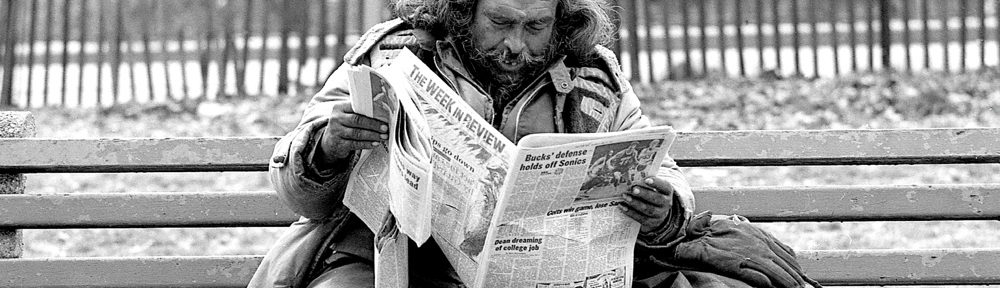
Henry Thoreau say “when our life ceases to be inward and private, conversation degenerates into mere gossip. We rarely meet a man who can tell us any news which he has not read in a newspaper or been told by a neighbor; and for the most part the only difference between us and our fellow is that he has seen the newspaper or been out to tea and we have not. In proportion as our inward life fails we go more constantly and desperately to the post office. You may depend on it that the poor fellow who walks away with the greatest number of letters proud of his extensive correspondence has not heard from himself in a long while.”

Fresh Expressions Changing the landscape

The FE day on Friday was an interesting experience. I have been quite critical about some of the institutional issues that come with FE, but agreed to be on the new DVD. The people involved are great, but the PR machine was in full swing as the Arch bishop was given a copy of the DVD, and a lunch put on for contributors, then sales and resources were pushed, and the pain of birthing something new was conspicuous by its absence.

Several of the questions from the floor related to the institutional control and the need for space. A good example was a question to Bishop Graham Cray about licensing communion to a gathering a of a number of youth groups who were coming together as an expression of church. The bishops response asked if the group existed for itself or for others and if the latter there was no issue. On one level this seemed fine but everything in me was screaming about the who were we to deny their right to work out their expression, if it was adults would they even be having the conversation, in a post christian world how could the group not be a witness to the other, and would the bishops ever have the courage to de-license all those groups up and down the country that seem to exist just for themselves and seem to call themselves church.

It was incredibly encouraging to see the call to follow the missio-dei and the closing of the gap between mission and church. The arch bishops address was excellent and summed up StreetSpaces approach to ecclesiology brilliantly. He talked about church begins where Jesus is with other, Jonny has pretty much got the whole thing down here.

I still have questions about if FE can change the landscape but they are certainly cutting down a few trees, but I am unsure if there would ever root out all the issues.

Does Christianity have a future in a new shape?

After the programme does Christianity have a future? see iplayer here (our bit is around 37 mins in) I wanted to start a discussion about what I thought the programmes was going to be about which was more about the emerging shape of Christianity and how the values of Gen Y influence and change the way we do church. Ann Widecombe seemed to have an agenda around traditional approaches to faith, and how much she was involved in shifting the focus of the programme i am unsure. Dave Wiles summed it up nicely “Dear old Anne playing with red herrings”

SO am asking the question does christianity have a future in a new shape and what does that shape look like?

Heres one colour that I think the new picture will be painted with to get you started – it will be apologectic free, people will not bother about arguements like did God create the world in seven days, and whilst people may ask those sort of questions, answers will not be about justifying a defence but explaining that it doesnt matter and only giving their view as one of the options about what the truth may be.

Meet Them Where They’re At

Just to let you know that you can now download Meet Them Where they’re At on kindle. You don’t need a kindle to read it but can access kindle from most platforms, computers and smart phones. At the moment you can purchase via kindle for £20 less than you can get the book second hand on amazon.


Click HERE for the link

Surveillence Society

Was sent this great article via the Federation of Detached Youth Workers about the rise of surveillance in society, and rang home having just spotted another CCTV camera (on a pelican crossing!) whilst out on detached. Last paragraph below

Stuart Waiton
Article The Politics of Surveillance:
Big Brother on Prozac
Living in the shadow of the silent majorities the empty elite are constantly anxious, staring out onto a world they sense is beyond their control: A world that has been filled with ever more laws, regulations and forms of surveillance that have become a replacement for morals and politics. This increasingly technical, managerial and authoritarian elite are not Orwellian but are anxious authoritarians. This is a weaker and wetter political elite, not stamping down on us with their boots, but shaking in them.

Only a few generations ago Britain had nearly 3.5 million adult members of political parties, today there are around 4 million CCTV cameras in the streets of Britain: CCTV cameras manned by Big Brother on Prozac.