Why What Works, Works: Contextual Mission and the Shape of Faithful Innovation

We know, at least intuitively, that some things work in mission and some don’t. We can point to Bubble Church, Messy Church, particular church plants, fresh expressions that have taken root and borne fruit. The temptation is to move too quickly from that observation to replication: this works, therefore let’s do more of it. But that instinct, while understandable, misses the deeper truth. What works, works because at its heart is contextual mission.

The truth is to be effective it has to be about contextual mission. A basic understanding of systems evens backs this up for Worship First church planting models.  This is something I have reflected on before using the Cynefin framework. In the bottom right-hand corner of Cynefin, the simple domain, we are dealing with contexts where cause and effect can readily understood, so worship first large scale plants can work, because you know the soil (context) they need to be planted in. Ie Resource Churches is areas with high student numbers, where the employees suit the context.  You cannot impose a solution from elsewhere and expect predictable results in the Complicated Zone, here you need contextual adaption eg worship first church plants in a market town may need a families worker instead of a student worker.  Then in the Complex and Chaotic Zones context comes even more to the fore, you probe, sense, and respond. You listen. You pay attention. You act humbly and experimentally and so Listening or Community Church planting, at its best, lives precisely here. 

This all works not because any of it follows a universal template, but because it all begins with a level contextual awareness. The plant knows where it is, who it is among, and what the Spirit might already be doing there. That attentiveness to context is not incidental; it is the very reason fruitfulness becomes possible.

At the heart of the things that work in mission is not a model but a posture: listening to the Missio Dei and the context. 

Take Bubble Church as an example. One could argue quite clearly that Bubble Church works because it is contextual mission. It is not magic, nor is it universally transferable. It works because local vicars and clergy have listened carefully to their context, often noticing young families on the fringes of church life, parents seeking connection, children needing space to be themselves, and have identified Bubble Church as a resource that fits. The model is then brought in not as a franchise, but as a contextual response. The same can be said of Messy Church. Its effectiveness lies not in crayons and craft tables per se, but in the way it emerged from listening: to families, to patterns of time poverty, to the desire for intergenerational belonging that does not rely on cultural fluency with inherited church. Messy Church is context-first mission that happened to crystallise into a recognisable form.

Even in church planting circles that talk about being “worship first,” the same dynamic is at play, whether or not it is always acknowledged. Worship-first plants do not appear randomly (or if they do they tend to fail). They are often planted into areas with high student populations, or significant numbers of young adults, or cultures where music and gathering carry particular social weight. The decision to centre worship is might itself be more the result of contextual listening than many assume. 

This is why fresh expressions remain so important. Fresh expressions are not primarily about novelty, nor about ecclesial experimentation for its own sake. They are about starting with context. They are about taking seriously the conviction that there is no such thing as a generic mission field, and therefore no such thing as a one-size-fits-all church.

I have argued that mission takes place within complex, adaptive systems, that culture is semiotic. Therefore, Churches, neighbourhoods, cultures, and networks are not machines to be engineered but living systems to be engaged. Within that framing, More recently I have suggested that faithful mission involves thinking carefully about how we scale: not just out, but deep and up as well.

Scaling out: replicating a model in new places, can be fruitful, but only when accompanied by contextual discernment. Scaling deep is about embedding practices, values, and theological depth within a particular place, allowing mission to become part of the local ecology rather than an imported programme. Scaling up involves influencing wider systems, structures, and cultures, enabling learning and resources to flow without flattening difference.

The common thread running through all of this is about taking context seriously. The danger comes when we adopt a consumerist logic: identifying a successful model and attempting to roll it out indiscriminately. Scaling Bubble Church simply because Bubble Church “works” risks misunderstanding why it worked in the first place. Without the right context, without listening, without local ownership, the model becomes hollow. It may look right, but it will lack life and longevity. 

At the heart of all good mission is context. Not context as a box to be ticked in a planning document, but context as a theological commitment: the belief that God has taken the particular (be that place or interest) seriously enough to become incarnate, and therefore we must do the same. Contextual mission is not a strategy; it is a way of seeing.

If we want to be faithful rather than fashionable, fruitful rather than frantic, then the task before us is not to find the next thing that works and copy it. It is to cultivate communities that know how to listen to God, to place, to people and have the courage to respond in ways that may look very different from one context to another. That, ultimately, is why what works, works.

A pause in poetry

For the last few years some friends have invited us to Burns Night and to bring a poem. I came across some words of a friend of friend of mime who was speaking to a women’s group and said “poetry is not an inspiration we have enough pressure around us without adding to that”. That poetry was more distillation of noise which made me think about pauses.

So I thought I’d try something more aligned with that rather than my usual style but aas seems usual hope still creeps in at the end.

Exhalation for Burns Night

Tonight we raise the glass, not in grandeur,

but in gratitude for breath itself.

The poet’s gift is not the torrent of words

but the pause after

that quiet reckoning

when the room shimmers in a moments silence

Robert knew it,

The yeast of life fermenting knows it,

The plough of soil turned to the light knows it

The mouse in winters nest knows it

Tonight we stand in that same field,

For a moment distilled from noise….

steeped in the grace of a pause.

Perhaps even a holy pause reflected in the whisky’s surface,

a quiet tremor in the chest as the warm Spirit flows into our soul.

An inhalation that silences the world’s chatter,

And breathes back a quiet hope that things will change for the better.

Holy reverence and the Christmas gap

I love reading about the planting of the sycamore gap saplings. A picture from one planted locally caught my eye as there seemed such a holy reverence in the images. It inspired this which I thought might be apt to post in the randomness of the space between Christmas and new year.

They felled the tree,
and for a moment the gap grew wider
a space by an ancient wall,
an ache in the air.
Yet even in absence,
something holy lingered.
The earth itself began to hum
with all the waiting things.

Now across the land people kneel in winter rain,
hands muddy with faith,
pressing small roots into cold earth.
Each sapling a testament
that what is lost is not forgotten,
that gaps can cradle more than grief.

God is not afraid of empty spaces.
The womb,
the manger,
the gap between promise and fulfilment,
all tremble with the same possibility.
So we wait, we dig
and plant, with hope
breathing reverence into the soil,
trusting light will find a way again.
So places one laid bare with winters frosty hue,
Will teem with laughter, swings and shade for summer’s glow.

Pioneer Breath Prayers

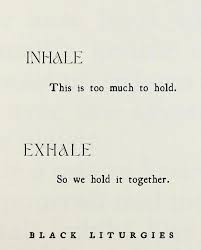
I really like Cole Arthur Riley’s writing and in particular the Inhale and Exhale breath prayers.  This one stuck me for this current time. I think her work is great but understand it’s an approach to prayer that has been around a long time. In the fx advent series we used the breath prayer approach but it also made me wonder what pioneer breath prayers might look like as I particularly like the balance so played with these as some possibilities.

inhale – possibility is within you

exhale – another world is possible

inhale – the kindom is now

exhale – the kindom is not yet

inhale – we journey to the edge spaces

exhale – we find kinship along the way

inhale – from dust we came

exhale – we call the walls to dust


The death of ideas

Walking the dog a while back I was taken with the amazing seed heads around and make me think about the scripture “Unless a grain of wheat falls into the earth and dies, it remains alone; but if it dies, it bears much fruit.” (John 12:24). It caught me not just as a verse of hope, but as a pattern that runs deep in how ideas grow.
Since Wallas, described a four-stage model of creativity in his 1926 book The Art of Thought, when we talk about ideas, there are stages that repeat. I particularly like Shannon Hopkins idea of “junk the brain” get all the ideas out fast and furiously to make space for some real out of the box thinking.

One pattern could read along the lines of First is the spark, that flash when the idea is born. Second comes the shaping, when we test and sketch, throw things out to see what sticks, gathering others to work it up. But I think the third stage is stranger, harder and looks suspiciously like death, either in terms of Shannon’s junking all the other ideas or as the third stage of ideation, when the idea no longer belongs to you. When you stop clutching it tightly as your possession and allow it to be buried, entrusted to soil that something new grows. The grain of wheat image is not about efficiency or productivity, it’s about release. It suggests that if we refuse to let go either of the initial ideas or if we insulate and protect our bright spark from change, criticism, or collaboration, it remains alone in its own sterility.

But when we release it, even bury it, something else happens. It may disintegrate in its original form, but in that decomposition potential multiplies. Fruit emerges. The community reshapes it, God breathes on it, and what was once “mine” becomes “ours.” What was a single thought or series dies and seeds a space where movements emerge that belongs to something bigger than we imagined.
In organisational innovation, this feels risky. It is tempting to hold to control structures, to keep ownership, to patent and protect. But ideation as faith practice teaches a different rhythm: hold lightly and let the seed fall. Trust the soil of community and Spirit. The third stage is less about control more about surrender.

I wonder if this is why so many pioneering ideas falter, they never move beyond the hand of the founder. We tend to want the harvest without the letting-go. Yet John’s image is uncompromising: the fruit only comes after the seed dies to its own form.
So perhaps the invitation today is simple but costly. What idea are you still clutching in your hand, afraid to plant? What seed needs releasing into the ground of community, risking loss in order to multiply life? Ideation is not complete until we dare to embrace the third stage, trusting death as the doorway to a new future.

How do you know who is safe

I recently bumped into an old friend and student who I hadn’t seen for 20 years. He asked “was I still as radical in my theology and thinking as ever?” I said yes probably even more so. He then preceded to tell me about how his church had become fully inclusive a while back and how they lost people. I wonder if in part if he was checking if I was still a safe person to this news with? The encounter made me wonder how in an  age of virtue signalling that can be nefarious, do people who need to share things know you are safe?
So I thought I would ask my friend Jo Dolby a few questions. She is the Community Director of The Oasis Hub Bath.

1) What practices and attitudes can an individual adopt to make it visible and known that they are a safe person for others?

The bottom line for me is about being someone that is committed to self awareness, and who has a desire for learning and growth. The safest people to me are people I know have ‘done the work’ on themselves, whatever that means for them. They know their weaknesses, own their mistakes, apologise when they get it wrong, and see all others as teachers who can help them work out their blind spots and do better when they know better. An obvious process that helps with this is something like therapy, but also anything like spiritual direction, supervision, appraisals (360 feedback is great!) reflective practice etc. Even smaller daily practices can be amazing – like the examen, journalling, meditation or prayer where you leave space for silence and stillness and actively reflect on what you’re experiencing, and what you’re noticing about yourself, others and the world around you. So much of being safe for others is about awareness, so do what you can to increase your own awareness, and tell others about these practices!

I’d also add that it’s impossible to be a totally safe person, and that’s ok! I love Brené Brown’s discussion of the difference between safe spaces and brave spaces, where she argues that to promise safety for someone is to make guarantees about other people (and I would argue yourself) that you just cannot make. We are all human, and we will make mistakes and hurt people, so we cannot always guarantee to be safe, or to provide a totally safe space. A brave space is one where difficulties and differences still happen, but we have the bravery to have the tough conversations, express how we truly feel, and deeply listen to others so we learn and are changed and challenged as a result. I would say try to be safe but mostly be brave – listen as much as you can and ask questions to deepen your understanding (I have a rule of trying to ask two questions before giving an opinion or statement in response to someone!), be open to being wrong, be kind to yourself, be honest and expect others to educate you. If you don’t know the right words to use, just ask!

Finally, don’t underestimate the little things. Small signs often go a long way. When you are wearing a rainbow lanyard, when you include your pronouns in your email footer, when your display a Black Lives Matter badge on your rucksack, when you mark Pride month as a manager with your team in some way, these things communicate to others that you ‘get it’, that you care about this stuff, that you understand and value difference and therefore you will understand and value their difference. This advert for Oslo Pride is incredibly powerful, and demonstrates what a big impact these small acts can have: https://www.youtube.com/watch?v=UVepoXddTW4

2) How do you create and hold a space where people feel safe enough to share their real stories and identities, especially when they may have been hurt by church before?

I would echo my thoughts above on creating a brave space, rather than promising a safe one. If you want to dig a bit deeper into what this looks like, the definition of a brave space from the Oxford Review is helpful;

‘Brave space is a concept that goes beyond the traditional safe space ideology. While safe spaces aim to provide refuge from discrimination and harm, Brave Spaces encourage individuals to engage in courageous conversations, confront biases, and challenge perspectives constructively. It acknowledges that discomfort and growth often go hand in hand, and by stepping out of comfort zones, meaningful progress towards inclusivity can be achieved.’

People may feel safe to share their own stories and identities when they see this kind of behaviour modelled – when they know people are not afraid to have tough conversations, challenge perspectives (but from a place of kindness and respect), and when they feel they are seen as someone to learn from, not someone to ‘correct’ or change to become like the group or socially dominant culture of that setting. It’s the difference between inclusion and affirmation – where people are celebrated and seen as a gift, rather than tolerated or included and seen as an inconvenience.

Victoria Stubbs from the University of Maryland, wrote a paper on brave spaces defining six pillars of a brave space, which I also think are helpful. Perhaps you could think about what this might look like in your context or role?

1)    Vulnerability (making yourself vulnerable and at risk of harm)

2)    Perspective taking (owning our own biased perspective and being curious about other’s perspectives)

3)    Leaning into fear (doing the thing we’re afraid of)

4)    Critical thinking (questioning and being open to being questioned)

5)    Examining intentions (“Is what I am about to share for the purpose of advancing dialogue or merely self-serving? Am I oversharing? Is what I am saying operating from a place of personal integrity? Examining our intentions also enables us to hold ourselves accountable for our words and actions thus promoting a deeper level of self-awareness.”)

6)    Mindfulness (Being fully here, in this moment)

When I think specifically about how to make something or somewhere safe (or brave!) for those who have been hurt by church, I also think applying a trauma informed approach is so important. That’s a whole blog post in itself, but across most disciplines there’s agreement that being trauma informed means embedding and applying principles such as trustworthiness, safety (physical and psychological), choice, collaboration, empowerment and cultural consideration.

I’ve chucked some big words and theory out there and you’ll need to work out the application and examples for your context, but there’s as much to be said about doing the right and little things consistently. Asking about pronouns, challenging the sexist joke someone makes, apologising for the mistake you made – all those things are also the application of those bigger principles.

3) In a culture where inclusion can sometimes be used as virtue-signalling, how do you discern authenticity in others and how can I demonstrate authenticity as a leader?

Authenticity to me, particularly in leadership, is so often the difference between words and actions, and whether those things line up. So many people in the past have told me how they’re personally affirming theologically and are totally with and for me, but continue to stay silent about those beliefs. Or others will attend churches that discriminate against people like me and cause great harm with the non-affirming theology they teach and model, but hey, at least “the kids work is great”. Not only do they attend these churches but they resource, support and enable them through the giving of their money, time and energy. They’re part of the problem! I will believe you are authentic when your actions start to match your words, and when you show up in solidarity and sacrifice, speaking out about the things that matter even if it costs you (and your family) something in the process.

I would also challenge us to go beyond inclusion. We don’t talk enough about the problems of inclusion, that actually, it doesn’t go far enough! There is a huge difference between including someone, allowing someone in your space that’s comfortable for you, where you hold the power etc, and affirmation – where difference and diversity are celebrated and seen as essential for the flourishing of a community, and where it’s understood that a community without difference is a community that is lacking and impoverished. You need me and I need you, and when that’s recognised, we can all flourish.
Beyond Blueprints: How Systems Thinking Can Transform Mission

We are intertwined systems, they shape us and  we, in turn, shape them. In the years I been blogging here I have  long explored the tangled roots of mission, church, and community, resisting the urge to slip into tidy dualisms or easy binaries. Instead, I’ve tried to inhabit that compost-rich space where culture and nature, activism and contemplation, all intermingle. As I look to the next chapter I want to reflect on that  learning particularly from the “Crafting Mission in Systems” journey and see how they are resonating with the work of Alchemy At The Edge. Skip to the bottom of the post if you want to see 3 services that people are finding particularly helpful at the moment.

From Compost to Craft: Mission as Alchemy

Mission is not a static program to be rolled out, an ABC or a rock-solid truth to be defended. It’s a living, breathing system, a field of relationships, stories, and experiments. We are not outside the system, tinkering with its gears; we are the system. As Bayo Akomolafe says, “we are not stuck in traffic, we are the traffic”.

Alchemy At The Edge, in its very name, hopes to evoke the ancient art of transformation. Alchemy was always more than a quest to turn lead into gold; it was a way of seeing, a practice of attending to the hidden processes that bring about change, both in matter and in the soul. The alchemist’s work was slow, patient, and deeply attentive to the interplay of elements. In the same way, I hope my services are about facilitating transformation within organisations, teams, and individuals, not by imposing a blueprint, but by cultivating the conditions for emergence and growth.

Letting Go of Control: Embracing the Unknown

One of the persistent themes in Sunday Papers is the tension between epistemology (knowing, controlling, securing) and ontology (being, becoming, risking). In the “Crafting Mission in Systems” post, we are reminded that real change rarely comes from clinging to certainty. Instead, it emerges when we risk stepping into the unknown, when we allow “grace spaces” to disrupt our routines and invite us into new patterns of relationship.

Alchemy At The Edge’s approach will mirror this and are be not about delivering off-the-shelf solutions or quick fixes. Recently I worked with a diocese and the planning and preparation sessions with the leadership team were so key in making sure what was delivered was not just properly contextual but also spoke to the deeper issues being faced. I want to work alongside people and systems to co-create processes that honour the complexity and uniqueness of every context. To help organisations raise their head beyond the pulpit and step into new possibilities, trusting that something richer and more generative can emerge.

Systems, Stories, and Soul Work

At the heart of both the Sunday Papers ethos and Alchemy At The Edge’s practice is a commitment to deep listening and story. Systems are not just structures; they are made up of people, histories, and hopes. Transformation happens when we pay attention to the stories we tell, the rituals we practice, and the ways we show up for one another.

Alchemy At The Edge will facilitate this kind of soul work within organisations not just individuals. Creating spaces where teams can surface hidden assumptions, name what matters most, and imagine new ways of working together. Like the alchemist, they know that true change is both an art and a science,  that it unfolds in stages, often requiring us to sit with uncertainty and paradox.

The Edge of Becoming

To craft mission in systems is to embrace the messy, generative work of transformation. All models are wrong but some are helpful. As I have started having conversations and work with dioceses and other clients a few key assets/models/processes have emerged that people are finding helpful and I can build sessions around. These include

1. Scale – Scaling Out is pretty straight forward as good ideas spread but Scaling Up or Deep is more challenging. I have been working on processes that help identify what and blocks and opportunities for Scaling Up and Deep which  will embed and accelerate change.

2.Mixed Ecology Trellis – lots of dioceses have found the Trellis helpful to describe and value the whole Mixed Ecology of church, but don’t realise that it can be operationalised as a diagnostic tool both for leadership development and to Scale Out at local and regional levels.

3 Theory of change development – if you aim at nothing you hit it. Recent sessions helping people explore the why behind what they do have been helpful in designing better processes. This not only ensures that what they value is front and centre but that these values inform and drive real change. Too often organisations talk about being values driven without a real understanding or process to ensure they translate in action and lasting change.

In the end, perhaps the greatest gift we can offer is to hold space and to trust that in the compost something beautiful and unexpected can take root.

“We are all in the system. The truth is at hand and it’s held with an open palm… the kin-dom is so much more than we can imagine.”

For a conversation on what I can offer your organisation or diocese please GET IN TOUCH


Hope is muscle

Hope is a muscle not wishbone or whisper,
but sinew and tendon
that flexes beneath the skin
with every reimagined dream of a better world.

It is not fragile,
but the steady clench
of hands in the dirt,
the slow, stubborn lift
of eyes toward a dawn
that hasn’t yet arrived.

We exercise hope
each time we imagine
a world remade:
where children run to school
in a city unscarred by war
Instead of running from guns at feeding stations.

We exercise hope each time we imagine
A place where hard borders are softened
into warm welcome 
Where knocks at the doors are from friends, instead of agents of the state sowing fear of deportation

We exercise hope each time we imagine
Sitting down beside rivers teeming with fish
and where forests and fields of wheat breathe
without fear of tanks and guns.

Hope is not passive—
it sweats and strains,
aching after use,
growing stronger
with every act
of radical imagination.

It is the muscle
that refuses to atrophy
when news darkens,
hope strengthens the heart’s resolve
to plant seeds
in battered soil,
to write poems
in the rubble,
to dream aloud
in the silence
between sirens.

Hope is a muscle—
embrace it,
stretch it,
shape it
into the world
we long to see

Building Communities That Honour the “Other” and resist unconscious capitalist bias.

At the heart of many of the issues we face is our unconscious tetheredness to capitalism and how this playing out in its late stages. Inspired by  Ian Mobsby recent article I wanted to explore more how non othering emerging church or community spaces might play out practically in the light of my recent posts. As Ian highlights Merton wrote  “The beginning of love is the will to let those we love be perfectly themselves…”

This vision of love—unpossessive, liberating, and rooted in radical acceptance—is both beautiful and destabilising. It asks us to relinquish control, to release our grip on outcomes, and to embrace the sacred chaos of difference. But how do we translate this into the messy reality of community-building? What practical approaches may help us resist the urge to “twist” others into our image. Here’s a few thoughts drawing from Merton’s theology, eco-feminist thought, and lived experiments I have been involved in over the years.

How do we build on Divine Love, Not Human Effort, Merton argued that true community is founded not on our “own love” but on “God’s love”—a love that “puts us in a position where sometimes natural community is very difficult” . This shifts the focus from compatibility (seeking those like us) to faith in something larger than ourselves. Christina Cleveland writes similarly in her work on reconciliation. What I particularly like about Christina’s work is her acknowledgment of the mental and emotional energy these spaces take. Stereotyping and categorisation are short cuts are hard to override and even in a more enlightened outlook it’s takes energy and intention to try and inhabit these spaces.
In practice either joining or intentionally gathering people across ideological, cultural, or generational divides, through local community garden for instance could a way forward. However in reality too often these spaces can be pretty homogenous. So intentionality to host shared spaces is needed eg meals where climate activists, retirees, and teenagers collaborate on composting projects, learning to listen without agenda.
A key for us in Cumbria has been to Ritualise surrender, in our Cmpfire gatherings we set the tone by saying we are not here to fix things and use a talking stick for simply creating a space to listen deeply. I wonder what would it look like to begin meetings with a simple practice: “We are here not because we agree, but because we trust something beyond us.” Reframing conflict and spaces as generative, not destructive.

Borrowing from ideas in  Eco-Theology of Becoming-With what does it mean to move on from notions that we need to fix stuff. Donna Haraway’s concept of “becoming-with”—seeing humans as entangled with non-human beings and ecosystems, resonates with Merton’s call to love others as they are. This ecological lens rejects transactional relationships (e.g., “I’ll love you if you change”) in favour of mutual accompaniment.
Soil doesn’t demand plants conform to its image; it nourishes what grows. Applying this to community roles: lets gifts emerge organically. What would it look like to shift from hierarchical leadership to something more organic based on needs at particular times and where tasks are claimed based on passion, not just expertise.

In Alchemy At The Edge I’m working on the idea of Listening Fast and Listening Slow, and how context changes the listening process. If we host walks where members share stories while attending to the more-than-human world—birdsong, wind, urban rhythms our listening will be very different.  This approach dilutes the ego’s voice and fosters the type of missional humility the church really needs.

There is an unconscious capitalist bias around progress and growth. It’s something we have noticed in our mixed ecology trellis, because it can read like a graph people make an assumption that we value top right more than bottom left. We can these challenge capitalist efficiency assumptions by honouring those who simply be—the elderly, neurodivergent, or chronically ill, as vital to the community’s ecosystem. In the context of the Mixed Ecology of church this means recognising the value of everyone on the Trellis.

I love TAZ spaces and Merton acknowledged that “we are going to make mistakes” in community, but “it really doesn’t matter that much” if rooted in good faith . This liberates us from the myth of permanence, inviting experimentation. Do we really value process Over Perfection or again is our desire to get it right or make it permanent, or sustainable part of a capitalist bias. Creating pop-up spaces, temporary, theme-based communities (e.g., a 40-day Lenten arts collective or a prayer space, a listening bench) allow people to practise radical acceptance without lifelong commitment mirroring something to a TAZ.

We also need to normalise endings: what would it look like have fixed point reviews where you expect to end something unless there’s a real reason to continue, so we prevent stagnation and power hoarding. Instead of asking did this meet x or y outcome we could ask  “How did we help you become more yourself and would changing or ending our structure/meeting/values etc help you become more authentically you?
Instead of thinking  every relationship needs resolution or a space needs to continue what would a bless and release ritual for departing members or spaces look like  acknowledging their ongoing role in other spaces, with real joy and sadness.

Merton’s vision of love is no sentimental ideal. It demands courage to dwell in uncertainty, to release the ego’s need for control, and to trust that “the power of God’s love will be in it” even when our efforts feel fragile.  In a world obsessed with optimisation, building communities that honour the “other” becomes countercultural resistance—a way to “stay with the trouble” (Haraway) and find holiness in the unpolished, the unresolved, and the unscripted. Perhaps the most radical practice is this: to love a community enough to let it evolve beyond our own imagination.
“We are human becomings,” as Pip Wilson once wrote. May our communities become spaces where all people can unfold in their wild, messy, gloriously uncontainable uniqueness.

To all remains – Advent 2024

It’s been an interesting journey and this advent I wanted to reflect on the words “to all that remains”. The activist in me usually rushes to throw out words into the world and to resist this as a discipline this year I started a poem that I have been slowly adding to and editing for throughout advent so far. The past few years so much of my thinking has been drawn towards the earthed interconnectedness of what people call the Anthropocene. The space that transgresses the separation of culture and nature, it is a language that resonates deeply for. me and for those who have read this blog over the years will know im really not into dualistic ways of thinking. The journey this year has taken me deeper into compost theology, nature connectedness and the interconnectednesss of systems and particularly in recognition that we are all in the system. Bayos phrase “we are not stuck in traffic we are the traffic” has sunk deep into my soul over the last six months. Through all this my language has been in deficit, I can’t find the words to describe what is happening easily at this deeper soul level, I want to find a way to talk about the deep mystery in the deep compost, and usually find myself reaching for CS Lewis’s ideas of “Deep Magic” and Tillich’s “God as the ground of our being” and yet it still feels lacking. I guess it’s the space of art and poetry, so I wanted to write something more poetic to describe where my soul is reaching but even these words are only partial.

At the start of his article Doing Dirty Theology  Terry Biddington writes  “For a religion whose beginnings are to be found in an underground tomb or cave, the Christian community has made little effort over the centuries to familiarise itself with what lies out of sight beneath its feet, down there, under the dark earth, and in the soil that is, as we now recognise, the life-support of all living things on the planet (Cf. Genesis 2:4–12). Indeed, despite its beginnings in the soily depths, the Christian tradition as a whole has tended to strive only for the “light” of the celestial realms above and thereby eschew the mysterious “darkness” below. It seems historically to be a religion that has aspired ceaselessly for the bright realm of the heavens and has rejected the earthy darkness, the ensoiled and earthy materiality of the here-and-now.”

He goes onto discuss the earthy nature of Tillich’s statement, and that’s what I want to re-familiarise myself with. Its a journey that I thought I started when I moved here and started to relate back to nature through Mountain Pilgrims but actually its something I practiced long before I came to faith, when I would leave the house when my father had been drinking, or things were too much as sit by the stream where the wild orchids grew, or follow the deer and badger paths in the woods on the edge of Exmoor.

Advent is a good time to reflect on this earthed reality, but if we focus only on the light of the halo that so often surrounds our images of the baby Jesus we miss the deeper Christ that this halo is calling us towards. This space where nature and culture collide into the deep mystery in the deep compost where we have to let the soil do its work and let go.

When I started this post I thought the poem “to all that remains” was ready to publish but in writing this Im aware its not so that will have to wait for later in the season.