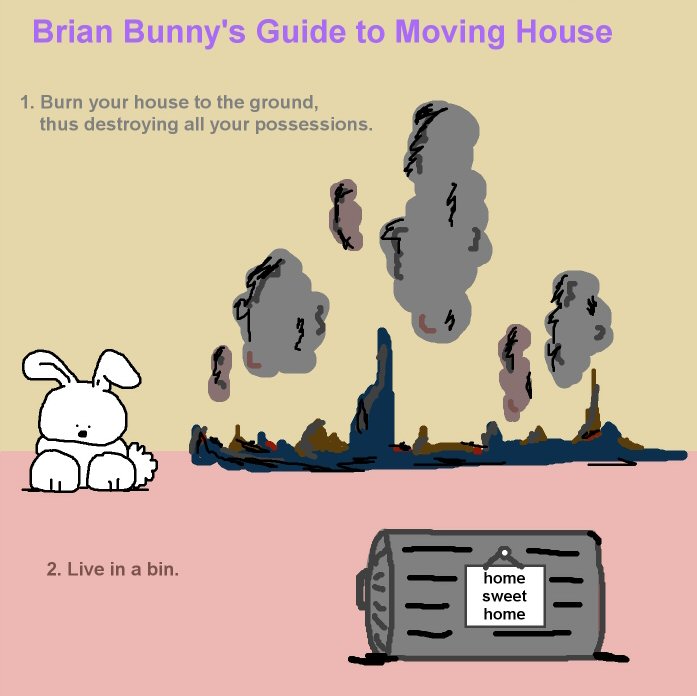
We have finally had an offer on our house and had one accepted on a house in Chard. All being well we will hopefully move before Christmas.
View full size This Is Spinal Tap on dvd
At last!
Reply
We have finally had an offer on our house and had one accepted on a house in Chard. All being well we will hopefully move before Christmas.
View full size This Is Spinal Tap on dvd
Hectic week of half term. Dads taxi service clocked up an unusual amount of miles with children having parties to go to, sleep overs, days at mates houses and a trip to see the great Wallace and G. In all busy but satisfying half term. It was good to catch up with friends over lunch and spend time doing what the children wanted. Looking back it was good to make the effort to fit in with other peoples schedules, to let the children take a lead in the agenda of the week, but at the time seemed much of life was out of control and quite stressful.
In recentre I was wondering out loud if the new centre of culture or western meta-narrative was popular culture itself. PG
commented on how scary a thought this could be which in turn reminded me of the Thoreau quote below, that I use when doing stuff on spiritual disciplines.
“when our life ceases to be inward and private, conversation degenerates into mere gossip. We rarely meet a man who can tell us any news which he has not read in a newspaper or been told by a neighbour; and for the most part the only difference between us and our fellow is that he has seen the newspaper or been out to tea and we have not. In proportion as our inward life fails we go more constantly and desperately to the post office. You may depend on it that the poor fellow who walks away with the greatest number of letters proud of his extensive correspondence has not heard from himself in a long while.”
Henry Thoreau
I wondered about a rephrasing
“when our life ceases to be inward and private, conversation degenerates into mere gossip. We rarely meet a man who can tell us anything genuinely new about God or the world; and for the most part the only difference between us and our fellow is that he has been surfing blog-sphere and we have not. In proportion as our inward life fails we go more constantly and desperately to the computer. You may depend on it that the poor fellow who walks away with the longest blog roll, proud of his extensive list of links has not heard from himself in a long while.” (adapted from Henry Thoreau)
The mere act of rephrasing this is ironical and forces me back to re-look at my walk before God.
In order to prepare for growth and outreach Chard Baptist are looking at Purpose Driven church, one of the principles of which is membership. This raises several issues for me. Membership in itself is not something I am fully confident about and whilst I understand many of the arguments, the approach to membership as we enter post Christendom seems all the more problematic.
How do you begin to grow towards maturity without membership? Murry in The church after Christendom offers a great critique of Matt 18 v 15-17
15″If your brother sins against you, go and show him his fault, just between the two of you. If he listens to you, you have won your brother over. 16But if he will not listen, take one or two others along, so that ‘every matter may be established by the testimony of two or three witnesses.’17If he refuses to listen to them, tell it to the church; and if he refuses to listen even to the church, treat him as you would a pagan or a tax collector.
Whilst I accept the possible intended use of the language of tax collector/pagan to signify an outsider, it is interesting that this is only one of two times the bible actually places the word church on Jesus’ lips. I would want to explore the creative tension that verse 17 throws up as we begin to consider how Christ would have treated tax collectors or pagans. Murry points this out but I would want to push this issue towards a maturity without membership, that does admonish one another in a non dislocating way, and uses the process well to reaffirm core beliefs so the whole community matures, but does not exile people who disaggree.
The Occasion “Creating Memories” that happened on October the 8th was a FANTASTIC event. The feedback was great. You find out just how good people said it was here Harry Potter and the Prisoner of Azkaban movies
as well as some of the peoples notes and powerpoints from workshops.

The feedback forms were great with 96% of the 115 people who completed a form saying they would recommend The Occasion to a friend and the other 4% was a maybe.
Lunch was at a local Chinese restaurant and all in all it was an occasion to be remembered. (excuse the double pun) Lori also put up a toilet at the top of the stairs for people to graffeti with the names of the youth groups they had been involved with over the years.


Bookmark the website www.tyws.org.uk if you are in the south west so you don’t miss out on the next one!
Sorry for the confussion Phil.
What I wondered or questioned is many people say due to post modernity there is no overarching meta narrative but I was questioning this assumption and think the metanarrative may have been replaced with a new overarching story that is mosaic of popular culture. eg in the past people found their place by how they related to the meta narrative of the time and now people find their place in relation to pop culture, ie we use it to help us interact with one another, people define themselves by the latest produce or band or music they adhere to. So whilst the metanarrative is less clear there is commonality to it. Does that make sense?
Thinking more about effect of post Christendom church and mission, I think finding the new centre of our culture will be important. As the meta narrative (overarching story or worldview) has been lost the question is what has replaced it. Currently I think it has been replaced by interactions with popular culture and so in true post modern style there is no single centre but a centre that is formed by a collage of people interacting through popular culture. So the idea of Sunday papers as a metaphor for church fits well.
I was discussing this with some guys on the train back from London. They don’t know each other but often travel together as they get on and off at the same station, often their conversation centres around what is the news or papers that day. More on this another day but my battery is about to die.
Ideas on where the centre of culture is now, greatly received
TSK posted a link
a good and well worked challenge to the hearers.
The experimentation and practice of the emerging church is cool and will go so far, but in terms of influencing mainstream church, if we are serious about reformation then we may need to adopt missionary principles in reverse.
Take communication for example, The question of how we communicate to established church is as important as what we communicate. In the same way as choosing the language we use within our culture at times we need to choose the language of the church. If that means preaching in a style that they be familiar with and changing the medium as you speak (bringing them with you) so be it.
The anarchist in me doesn’t like it, the pragmatist approves, but holding two together is one of the most important pieces of advice I was taught at college “learn the rules of the game and learn how to break the rules without people realising you’re doing so”.
All of which brings me back to the need for an authentic theologically grounded redefinition of church. So we need people to step up and start working this stuff through in a way that will be heard.
In response to info on DO-BE-DO at the moment it is just shorthand as a way of putting into action this chaotic but intentional way of living within a redefined paradigm of church.
It is little more than a framework encouraging action (DO) – reflection (BE) – action (DO), so there is no long explanation, or place to look at it.
One element of DO-BE-DO stems from some of my observations that many of the emerging church groups seem to locate the church element, in the process of coming together to plan a service or event that may take place monthly or a few times a year. This can reinforce the old paradigm of church as an event at a particular time, and yet for many it is the community that evolves through the planning process that is key. People bring their ideas and concerns to the planning process and a theme develops then an event is put on; the community that evolves is a positive by-product. I would suggest that within DO-BE-DO the worship event should be just one of the things the group does, and if people can bring the whole of their interest to the group then the collapse between church and the whole of life may begin. For example I know that within Grace, Jonny (Baker) has an interest in ad busting (sorry to pick on you Jonny), could the group come together to explore this and undertake some adbusts together (maybe they have) as part of their activity? Within my redefinition (see manifesto), this kind of activity would be encompassed within church.
I would love to hear from any of the emerging groups, if any of this resonates with you, and if you have had shared experiences outside of the worship planning process where you have questioned if it was church.
A second element of DO-BE-DO would incorporate the kind of issue Rivertribemike faces and raised in the comments when TSK posted the manifesto.
This is primarily where the intentionality element comes in, being in a group that sees the whole of life as church and so carries this mindset into all they do. The group can either participate with Mike in the birthday celebrations and then help him reflect on how he can grow through the experiences, or by Mike bringing his experiences from the celebration to the group in order to reflect and grow. His comments already show that he was thinking about how God connects with his birthday and who knows how bringing others into the reflection process (either in advance of the day or after) may change him and others involved.
Any thoughts on where to next also appreciated?
Thanks for the comments and feedback here and on other blogs on the past three posts around “Emerging church a manifestation of our sub cultural weakness”. I thought I would try and bullet point a few of the key issues and where we have got to so far incorporating the discussions we have had along the way.
A Manifesto Calling for a New Way of Being and Defining Church.
1. The first reformation gave the bible back to the people and we need to give church back to the people (not just christian people).
2. This will take a redefinition of church NOT just a change in style.
3. The churches sub cultural weakness is a leaning towards evolution over revolution, hence style over definition.
4. Theologically there are many examples of revolutionary steps or leaps in thinking, eg Peters vision, Jesus new covenant and so redefinition is plausible.
5. Any redefinition that is put forward needs to collapse the old ways of being that distinguish between church/worship/prayer and the whole of life, BUT hold the tension that whole of life may not be church. (which is where intentionality comes in)
6. The redefinition we are offering of Church in the post- Christendom west is a way of being and living that is a series of chaotic but intentional encounters with God, one another, and the world, founded on the holistic teaching of Christ, and encompassing the whole of life.
7. This encompasses the critical outcome of the imagery of church used in the bible, this being that all the bibles images of church include “attitude and course of action”.
8. This whole of life process is not about walls, rules or fences but about wells, mutuality and redemptive processes.
9. The theological processes and reflections offered so far are consistent with the biblical tradition and can be seen to offer an authentic and consistent redefinition of church.
10. DO-BE-DO, offers one practical way of putting this redefinition into action.