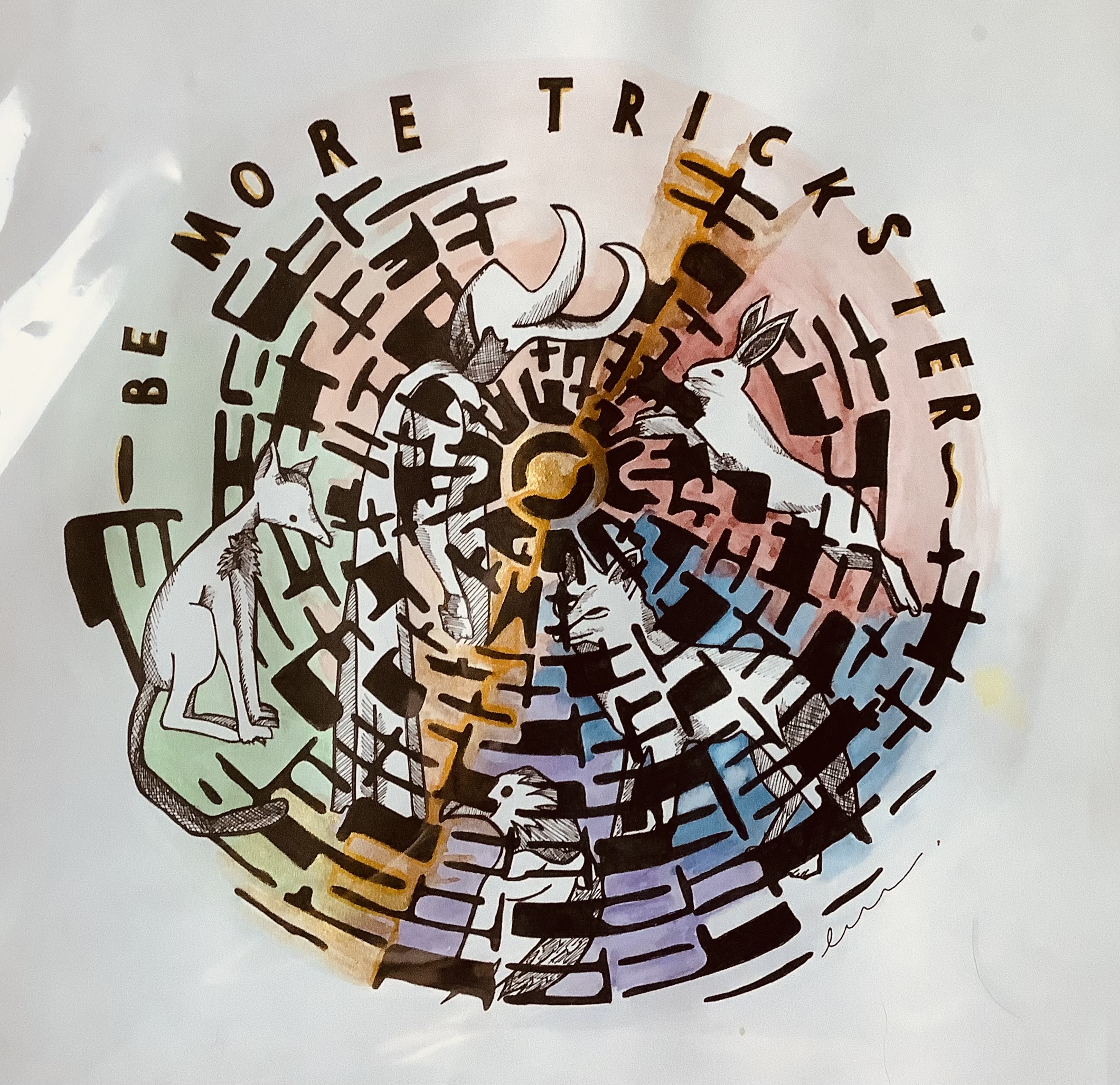
In the previous post I wrote about the importance of scaling deep; that elusive, essential work of transforming the cultural values, relationships, and everyday practices at the heart of our systems. Scaling deep, I argued, is about more than numbers or institutional reach; it is about changing hearts and minds, shifting the stories we tell, and nurturing the kind of belonging that can weather storms. Today, I want to expand on that theme, drawing in the wisdom of Rowan Williams and the concept of sobornost, and exploring how we might measure engagement by more than attendance or output, to include by our collective openness to possibility, creative reimagining, and the space we make for different voices.
Beyond Numbers: The Limits of Shallow Metrics
It’s a familiar refrain in church life: “How many came?” “How many stayed?” “How many gave?” These questions, while not unimportant, often reflect what I’ve come to see as institutional anxiety, our capitalist captivity, a need for reassurance that we’re growing, that we’re succeeding. But as I’ve reflected on the journey of Fresh Expressions and broader systems change, I’ve become convinced that these are shallow waters. Real, lasting change, the kind that endures beyond a single project, leader, or season requires a shift in the very soil of our communal life. This is the work of scaling deep.
Scaling Deep and the Wisdom of Sobornost
Here, Rowan Williams offers a profound lens. Drawing on the Russian Orthodox tradition and the theologians Losskey, Khomiakov Williams describes sobornost as a gathering of free persons into one organic body, not simply the sum of its parts but an active, living wholeness. Sobornost is not about headcount or institutional uniformity. It is about the quality of our togetherness: the depth of our relationships, the space we make for difference, and the organic unity that emerges when people are truly seen and heard.
Williams writes that the church, at its best, is a community whose boundaries have been decisively altered by the Resurrection, a place where the barriers of class, race, and loyalty are overcome, and a new social pattern of forgiveness, patience, and truth-telling emerges. This is not utopia, but a real, flesh and blood community marked as much by failure as by success. The point is not perfection, but the ongoing work of living into a new, unbounded world, a world where every face is one God has already looked at with love. When we take this as a base I think we can use the principles of Scaling Deep and develop at different set of measures, but we will need greater attention to process to make this sort of measurement possible.
Measuring Engagement with Possibility
If we take sobornost seriously, then engagement is not just about participation in programmes or committees. It’s about how we engage with possibility, how open we are to new ways of being, to creative thinking, to the reimagining of spaces and relationships. Here are some ways I see this playing out:
• Reimagining Spaces: Our physical and symbolic spaces shape our communal life. Too often they reinforce old hierarchies and exclusion. But what if we saw our spaces as canvases for possibility? What if we designed them to be more inclusive, more hospitable, more reflective of the diversity of God’s people? This isn’t just about architecture, it’s about the stories our spaces tell and the possibilities they invite. It’s as much about medium as message.
• Creative Thinking: Scaling deep is inherently creative. It asks us to imagine new forms of community, new patterns of discipleship, new ways of relating to one another and to God. This creativity is not a luxury; it’s a necessity for communities seeking to embody the gospel in a changing world.
• Personal Development Spaces: True engagement honours the personhood of each member. Are we creating spaces for personal growth, for the sharing of stories, for the honest wrestling with faith and doubt? Are we nurturing resilience, vulnerability, and the gifts that come from lived experience, especially from those on the margins?
• The Place and Space of Different Voices: Sobornost insists that unity is not uniformity. Are we making space for voices that have been silenced, for perspectives that challenge our assumptions, for the kind of dialogue that Rowan Williams describes as essential to the church’s witness? Are we willing to be disturbed, to be changed by the encounter with the other?
All of the above provide real opportunities to measure scale both in terms of Scaling Up and Out and importantly Scaling Deep but we will need an accompanying shift to valuing story and gathering Narrative-Based Evidence that stories allude to.
So how do we measure this kind of engagement? I think if we get the principles right the organisation can use spreadsheets or dashboards, and numbers but the process or lens is through the gathering of stories, narrative-based evidence that honours context and personhood. There’s all sorts of participatory, narrative techniques like Community Narration invite members to share their experiences and to shape the collective story of the community. These stories reveal not just what we’ve done, but who we are becoming. They help us see where we have truly scaled deep, where hearts and minds have been changed, where new possibilities have emerged, where the quality of our togetherness has grown.
“Narrative methods have great potential to avoid hierarchical and unidirectional forms of evaluation, encouraging the group’s collective psychology and identity-based constructs to emerge… The community’s participants were able to use the technique successfully, found it enriching, and the constructs obtained have led to many discussions and member-guided research related to the organization.” See here
Mapping Scale: Out, Up, and Deep
Once we begin to gather this narrative evidence, we can more easily categorise where we have scaled out (replicating innovations), scaled up (influencing systems and structures), and scaled deep (transforming culture and relationships). Scaling out and up are often visible and quantifiable. Scaling deep, by contrast, is subtle, slow, and sometimes invisible yet it is what makes all other change sustainable.
Honouring Context and Personhood
At the heart of this approach is a commitment to honouring both context and personhood. Every community is unique, shaped by its history, its challenges, and its gifts. Every person brings their own story, their own wounds and hopes. Scaling deep means attending to these realities, refusing one-size-fits-all solutions or predetermined outcomes and opening ourselves to the possibility that God is at work in the very particularities of our lives.
So, through Alchemy at the edge I invite you to join me in measuring engagement not by what is easy or obvious, but by what is deep and lasting. Let us reimagine our spaces, nurture creative thinking, make room for every voice, and gather the stories that tell the truth about who we are and who we are called to become. In so doing, we honour the spirit of sobornost, a unity that is organic, dynamic, and always open to the possibilities of grace.
And perhaps, in the end, this is the most faithful measure of all: not how many we have gathered, but how deeply we have learned to belong to one another, and to the God who calls us into ever-widening circles of possibility.