The Universal Suffrage of Creation and Us

There is something embarrassing about our obsession with happiness. We chase it like desperate of addicts but with the optimism of gamblers. We rename it wellbeing,  flourishing, fulfilment, but maybe it’s the same. The saying goes “happiness is fleeting” and the weird thing is not that happiness is fleeting but that we continue to search for it as if we could readily achieve it.

Blaise Pascal suggested that this longing is not foolish our search is rooted in something deeper than the memory of fleeting times of happiness. We search for happiness because we once experienced it. Not in fragments or weekend bursts as a whole way of being, an atmosphere pat of our origin story. In his Pensées, he proposes that the human heart carries the trace of a joy it can no longer access. We are not inventing desire. We are remembering it.

But if happiness is so fleeting now why should we continue the search? Why not conclude that happiness is simply a neurological trick, a temporary spike in dopamine that evolution wired into us to keep the species moving?

Pascal refuses that reduction. He says that the very persistence of the search is evidence of something far bigger. We would not hunger for what had never nourished us. We would not ache for a fullness we had never tasted. The restlessness is a clue, and the craving is an echo from the deep.

In trying to make sense of my growing sense nd desire for nature connection I wonder what if Pascal was right about happiness but also what if that explains the desire for creation.  What if the search for happiness was not just rooted in an abstract idea about our need to return to the creator where we experienced true happiness but also to return to the place we experienced it the creation. The fracture we feel is not just vertical but horizontal it’s as much heavenward as earthward?

Because our longing is not only for transcendence. It is for soil, sea air, trees older than our politics and rocks that stood the test of time. Like well-being we speak too casually about “getting into nature” as if it were a hobby, but the relief we feel is rooted in something deep inside us unfurl when we stand under a warm sun?

It is too easy to sentimentalise this and perhaps we do this as a kind of coping mechanism because if we really sat with it we would have to confront something far deeper. The ache to be in creation is not merely aesthetic preference. It is visceral because runs deep in our souls beneath our consciousness whether we recognise it or not. Even those who rarely step beyond concrete still carry it, surfacing as restlessness, as low-grade anxiety, with the suspicion that life is thinner than it should be.

We are longing not just for creation out there. We are longing for something that is deeply within us, because we are not separate from it. Our bodies are made of what the earth is made of. Our breath is shared air. The iron in our blood was forged in stars. The boundary between “us” and “environment” is far more porous than our philosophies admit. So perhaps when we long for forests and oceans and mountains, we are not craving escape. We are craving integration. We are sensing that we once knew ourselves as part of a living whole. That happiness, the deep, steady, unfractured kind was not a feeling but participation.

If Pascal is right that we search for happiness because we experienced it once as part of communion with God, then perhaps that communion was never disembodied. Perhaps the joy of origin was not a private mystical glow but a harmony, Creator, created and creature in right relation. A real belonging, severed but with the possibility of a way back by being saturated in nature and confronting our loss honestly.

We have become the species that can refuse its own embeddedness. We can pave, extract, dominate, and still imagine ourselves autonomous. We have convinced ourselves that we stand over creation rather than within it. But time and time again our bodies betray us, we burn out we feel the need to numb ourselves. We seek stimulation because we have lost saturation in nature.

In older language, suffrage did not mean ballots and polling stations. It meant prayer. Petition. Intercession. A cry rising on behalf of another. I suspect, a universal suffrage is taking place. Creation itself is petitioning for wholeness. The groaning of forests stripped bare, the warming seas, the displaced creatures, these are not only data points. They are lament. But the suffrage is not one-sided our bodies are petitioning too. But we are looking in the wrong places, endless scrolling, compulsive productivity, hunger for experiences, these are distorted prayers.

The tragedy is not that happiness is fleeting. The tragedy is that we have mistaken the flickers for the fire. The brief highs for the home we lost. And so we keep searching, because somewhere beneath our cynicism we know the search is justified.

The universal suffrage of creation and us is a shared petition and we need to wake up to the fact that just earth strains toward renewal so do we.

The environmental crisis is not merely a technical problem it’s also a theological one. Our exploitation of the earth mirrors our exploitation of ourselves. We treat land as resource, and we treat our souls the same way. We optimise, mine, leverage the land and sea because we are too afraid to to sit, to confront the reality of our longing and so we are destroying the thing that could save us.

To find the happiness we once knew is not to escape from creation but through a perfect immersion in it, held within its love and the love of its Maker.

Solitude wasn’t a Spiritual Discipline, it was Survival

In the Christian tradition, solitude is often spoken of as a gift or a discipline. Loneliness, by contrast, is usually named as a wound. However in reality the boundary between the two can be blurred, especially when aloneness is not chosen but imposed.

For many people, being alone has never felt safe or spacious. For some, solitude intensifies anxiety, trauma, or a sense of abandonment. That matters, and it needs saying clearly: solitude is not a universal good, and it is not a discipline everyone can or should practise in the same way.

And yet, for some of us, solitude emerges not as a spiritual ideal but as something learned early out of necessity rather than desire.

Growing up in a context of Adverse Childhood Experiences (ACEs), I learnt early how to be alone. Often this was about safety: stepping away from noise, volatility, or emotional unpredictability. Nature became a place of refuge fields, woods, and in particular streams. These were places where my body could settle and my breathing could slow.

At the time, I didn’t have the language of spirituality. But I did have a fragile awareness that there was something more going on than mere escape. Being alone in nature carried a sense of depth, even if I couldn’t name it as prayer. It might have been hope, or longing, or even wishful thinking. But it felt like more than emptiness.

Looking back, I recognise that this awareness resonated so much with my current understanding of the Beloved and a deeply ecological spirituality. Long before belief is articulated, creation bears witness. The Christian tradition has always held that God is not only encountered in words and doctrines, but in presence, stillness, nature and attentiveness.

Loneliness and solitude are not the same

Loneliness is being alone without meaning, without connection, without a sense of being held. It contracts and restricts our sense of self. It corrodes trust. It can be spiritually dangerous, especially when wrapped in religious language that praises endurance but ignores pain.

Solitude, by contrast, is aloneness with attention. It may not always be chosen at first, but it becomes formative when it is accompanied by awareness of G-d, self, others and creation. The difference is not the absence of people, but the presence of a broader more connected relationship. Jesus himself embodies this distinction.

Over time, what began as survival slowly became something more intentional. Solitude developed into a discipline that I recognised from within. It became a place of presence without needing to perform competence, leadership, or certainty.

But still my ACE shape how Solitude now functions. On a good day solitude acts as a :

  • resistance to urgency,
  • resistance to the pressure to be endlessly available,
  • resistance to the belief that my value is measured by visibility or output
  • A reminder  that God’s work does not depend on my exhaustion.
  • A reorientation back to ministry flowing from being held, not from holding everything together.

On a bad day muscle memory takes over and I run for the hills or curl up in a ball beside a stream or focus on a tree….but that’s also ok. Too often however it means a withdrawal from connections that I should be paying attention to and that’s not ok.

I’m aware that my story cannot, and should not, be universalised. For some, solitude needs to be approached gently, or not at all. For others, healing comes first through community, therapy, structure, or safety. The Church does harm when it spiritualises isolation or confuses withdrawal with holiness.

The tentative testimony of my own life, my experiences of needing to be alone, held within nature and accompanied by an early, imperfect sense of “something bigger” became the soil in which a discipline of solitude could grow. What once protected me has become something that now strengthens me.

And perhaps that is one of the quiet redemptions at the heart of Christian formation: that God meets us not only in what we choose, but also in what we survive and patiently teaches us how to dwell there with hope.

To places we have never been before

Paul Bradbury’s recent reflection on moving beyond empire reminds us how deeply Western mission has been entangled with universalising instincts, the drive to export methods, models, or mindsets far beyond where they first belonged. His question, “How might we save the world without conquering it?” pushes us toward a more humble, localised, and participatory understanding of mission. It’s a call that echoes strongly with what I argued in my previous post what works, works because it is contextual.

If empire seeks control of space, then contextual mission seeks communion IN space. In other words, mission faithful to the gospel begins not with scale but with soil. It roots itself in place but years of contextual mission,following the missio dei and the incarnation has taught us place needs to be understood broadly. Contextually shaped mission is about both “communities of place” and “communities of interest”, and in both these, space matters or perhaps more precisely the space between matters.

Space as the Ground of Context

For communities of place, context is pretty straight forward it’s bounded by postcodes, pavements, local histories, and particular faces. Here, “listening to context” means walking the streets, dwelling among, noticing the patterns of belonging and exclusion, paying attention to how the Spirit stirs through daily life. The missional question is spatial: How is God already at work here?

But the same is true for communities of interest those gathered by vocation, affinity, digital connection, or shared passion. These are not disembodied spaces; they are differently embodied. They occupy networked space, an online forum, a workplace, a music scene, a shared narrative world. These spaces, too, have boundaries, cultures, and ecologies of meaning that also require listening, care, and presence.

To be contextual here means learning the topography of these less tangible places the rituals that shape belonging, the language that signals trust, the injustices and hopes that animate people. This too is place work. Contextual mission is not about being “place-based” versus “network-based”; it is about recognising that space and particularly the space in between is the texture of all context.

The Space Between: From Ownership to Participation

Empire’s imagination is to fill space to occupy, to own, to organise territory. Contextual imagination leaves space, space for others to speak, for grace to emerge, for co-creation. This is not the space of empire, this is the space of incarnation: God dwelling, not dominating; participating, not possessing. 

In our current moment, where both geography and culture feel unsettled, perhaps the task is not to create new models of church or even parish, but to nurture new ecologies of space, perhaps even Brave Spaces of Community and Conversation, porous enough to hold the complexity of both rooted neighbourhoods and fluid networks of meaning.

Context is not an afterthought, It isthe space where the gospel takes shape. So maybe the better question isn’t simply “What works?” but “Where does mission dwell?” Because where mission dwells, (whether a community of place or interest)  determines how God’s story is spoken and heard, and when we listen and join in we go to a new place we have been before. 

Why What Works, Works: Contextual Mission and the Shape of Faithful Innovation

We know, at least intuitively, that some things work in mission and some don’t. We can point to Bubble Church, Messy Church, particular church plants, fresh expressions that have taken root and borne fruit. The temptation is to move too quickly from that observation to replication: this works, therefore let’s do more of it. But that instinct, while understandable, misses the deeper truth. What works, works because at its heart is contextual mission.

The truth is to be effective it has to be about contextual mission. A basic understanding of systems evens backs this up for Worship First church planting models.  This is something I have reflected on before using the Cynefin framework. In the bottom right-hand corner of Cynefin, the simple domain, we are dealing with contexts where cause and effect can readily understood, so worship first large scale plants can work, because you know the soil (context) they need to be planted in. Ie Resource Churches is areas with high student numbers, where the employees suit the context.  You cannot impose a solution from elsewhere and expect predictable results in the Complicated Zone, here you need contextual adaption eg worship first church plants in a market town may need a families worker instead of a student worker.  Then in the Complex and Chaotic Zones context comes even more to the fore, you probe, sense, and respond. You listen. You pay attention. You act humbly and experimentally and so Listening or Community Church planting, at its best, lives precisely here. 

This all works not because any of it follows a universal template, but because it all begins with a level contextual awareness. The plant knows where it is, who it is among, and what the Spirit might already be doing there. That attentiveness to context is not incidental; it is the very reason fruitfulness becomes possible.

At the heart of the things that work in mission is not a model but a posture: listening to the Missio Dei and the context. 

Take Bubble Church as an example. One could argue quite clearly that Bubble Church works because it is contextual mission. It is not magic, nor is it universally transferable. It works because local vicars and clergy have listened carefully to their context, often noticing young families on the fringes of church life, parents seeking connection, children needing space to be themselves, and have identified Bubble Church as a resource that fits. The model is then brought in not as a franchise, but as a contextual response. The same can be said of Messy Church. Its effectiveness lies not in crayons and craft tables per se, but in the way it emerged from listening: to families, to patterns of time poverty, to the desire for intergenerational belonging that does not rely on cultural fluency with inherited church. Messy Church is context-first mission that happened to crystallise into a recognisable form.

Even in church planting circles that talk about being “worship first,” the same dynamic is at play, whether or not it is always acknowledged. Worship-first plants do not appear randomly (or if they do they tend to fail). They are often planted into areas with high student populations, or significant numbers of young adults, or cultures where music and gathering carry particular social weight. The decision to centre worship is might itself be more the result of contextual listening than many assume. 

This is why fresh expressions remain so important. Fresh expressions are not primarily about novelty, nor about ecclesial experimentation for its own sake. They are about starting with context. They are about taking seriously the conviction that there is no such thing as a generic mission field, and therefore no such thing as a one-size-fits-all church.

I have argued that mission takes place within complex, adaptive systems, that culture is semiotic. Therefore, Churches, neighbourhoods, cultures, and networks are not machines to be engineered but living systems to be engaged. Within that framing, More recently I have suggested that faithful mission involves thinking carefully about how we scale: not just out, but deep and up as well.

Scaling out: replicating a model in new places, can be fruitful, but only when accompanied by contextual discernment. Scaling deep is about embedding practices, values, and theological depth within a particular place, allowing mission to become part of the local ecology rather than an imported programme. Scaling up involves influencing wider systems, structures, and cultures, enabling learning and resources to flow without flattening difference.

The common thread running through all of this is about taking context seriously. The danger comes when we adopt a consumerist logic: identifying a successful model and attempting to roll it out indiscriminately. Scaling Bubble Church simply because Bubble Church “works” risks misunderstanding why it worked in the first place. Without the right context, without listening, without local ownership, the model becomes hollow. It may look right, but it will lack life and longevity. 

At the heart of all good mission is context. Not context as a box to be ticked in a planning document, but context as a theological commitment: the belief that God has taken the particular (be that place or interest) seriously enough to become incarnate, and therefore we must do the same. Contextual mission is not a strategy; it is a way of seeing.

If we want to be faithful rather than fashionable, fruitful rather than frantic, then the task before us is not to find the next thing that works and copy it. It is to cultivate communities that know how to listen to God, to place, to people and have the courage to respond in ways that may look very different from one context to another. That, ultimately, is why what works, works.

A pause in poetry

For the last few years some friends have invited us to Burns Night and to bring a poem. I came across some words of a friend of friend of mime who was speaking to a women’s group and said “poetry is not an inspiration we have enough pressure around us without adding to that”. That poetry was more distillation of noise which made me think about pauses.

So I thought I’d try something more aligned with that rather than my usual style but aas seems usual hope still creeps in at the end.

Exhalation for Burns Night

Tonight we raise the glass, not in grandeur,

but in gratitude for breath itself.

The poet’s gift is not the torrent of words

but the pause after

that quiet reckoning

when the room shimmers in a moments silence

Robert knew it,

The yeast of life fermenting knows it,

The plough of soil turned to the light knows it

The mouse in winters nest knows it

Tonight we stand in that same field,

For a moment distilled from noise….

steeped in the grace of a pause.

Perhaps even a holy pause reflected in the whisky’s surface,

a quiet tremor in the chest as the warm Spirit flows into our soul.

An inhalation that silences the world’s chatter,

And breathes back a quiet hope that things will change for the better.

Holy reverence and the Christmas gap

I love reading about the planting of the sycamore gap saplings. A picture from one planted locally caught my eye as there seemed such a holy reverence in the images. It inspired this which I thought might be apt to post in the randomness of the space between Christmas and new year.

They felled the tree,
and for a moment the gap grew wider
a space by an ancient wall,
an ache in the air.
Yet even in absence,
something holy lingered.
The earth itself began to hum
with all the waiting things.

Now across the land people kneel in winter rain,
hands muddy with faith,
pressing small roots into cold earth.
Each sapling a testament
that what is lost is not forgotten,
that gaps can cradle more than grief.

God is not afraid of empty spaces.
The womb,
the manger,
the gap between promise and fulfilment,
all tremble with the same possibility.
So we wait, we dig
and plant, with hope
breathing reverence into the soil,
trusting light will find a way again.
So places one laid bare with winters frosty hue,
Will teem with laughter, swings and shade for summer’s glow.

Pioneer Breath Prayers

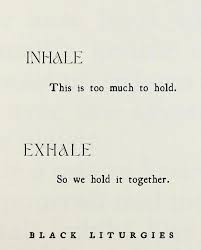
I really like Cole Arthur Riley’s writing and in particular the Inhale and Exhale breath prayers.  This one stuck me for this current time. I think her work is great but understand it’s an approach to prayer that has been around a long time. In the fx advent series we used the breath prayer approach but it also made me wonder what pioneer breath prayers might look like as I particularly like the balance so played with these as some possibilities.

inhale – possibility is within you

exhale – another world is possible

inhale – the kindom is now

exhale – the kindom is not yet

inhale – we journey to the edge spaces

exhale – we find kinship along the way

inhale – from dust we came

exhale – we call the walls to dust


The death of ideas

Walking the dog a while back I was taken with the amazing seed heads around and make me think about the scripture “Unless a grain of wheat falls into the earth and dies, it remains alone; but if it dies, it bears much fruit.” (John 12:24). It caught me not just as a verse of hope, but as a pattern that runs deep in how ideas grow.
Since Wallas, described a four-stage model of creativity in his 1926 book The Art of Thought, when we talk about ideas, there are stages that repeat. I particularly like Shannon Hopkins idea of “junk the brain” get all the ideas out fast and furiously to make space for some real out of the box thinking.

One pattern could read along the lines of First is the spark, that flash when the idea is born. Second comes the shaping, when we test and sketch, throw things out to see what sticks, gathering others to work it up. But I think the third stage is stranger, harder and looks suspiciously like death, either in terms of Shannon’s junking all the other ideas or as the third stage of ideation, when the idea no longer belongs to you. When you stop clutching it tightly as your possession and allow it to be buried, entrusted to soil that something new grows. The grain of wheat image is not about efficiency or productivity, it’s about release. It suggests that if we refuse to let go either of the initial ideas or if we insulate and protect our bright spark from change, criticism, or collaboration, it remains alone in its own sterility.

But when we release it, even bury it, something else happens. It may disintegrate in its original form, but in that decomposition potential multiplies. Fruit emerges. The community reshapes it, God breathes on it, and what was once “mine” becomes “ours.” What was a single thought or series dies and seeds a space where movements emerge that belongs to something bigger than we imagined.
In organisational innovation, this feels risky. It is tempting to hold to control structures, to keep ownership, to patent and protect. But ideation as faith practice teaches a different rhythm: hold lightly and let the seed fall. Trust the soil of community and Spirit. The third stage is less about control more about surrender.

I wonder if this is why so many pioneering ideas falter, they never move beyond the hand of the founder. We tend to want the harvest without the letting-go. Yet John’s image is uncompromising: the fruit only comes after the seed dies to its own form.
So perhaps the invitation today is simple but costly. What idea are you still clutching in your hand, afraid to plant? What seed needs releasing into the ground of community, risking loss in order to multiply life? Ideation is not complete until we dare to embrace the third stage, trusting death as the doorway to a new future.

The changing face of trickster in systems change

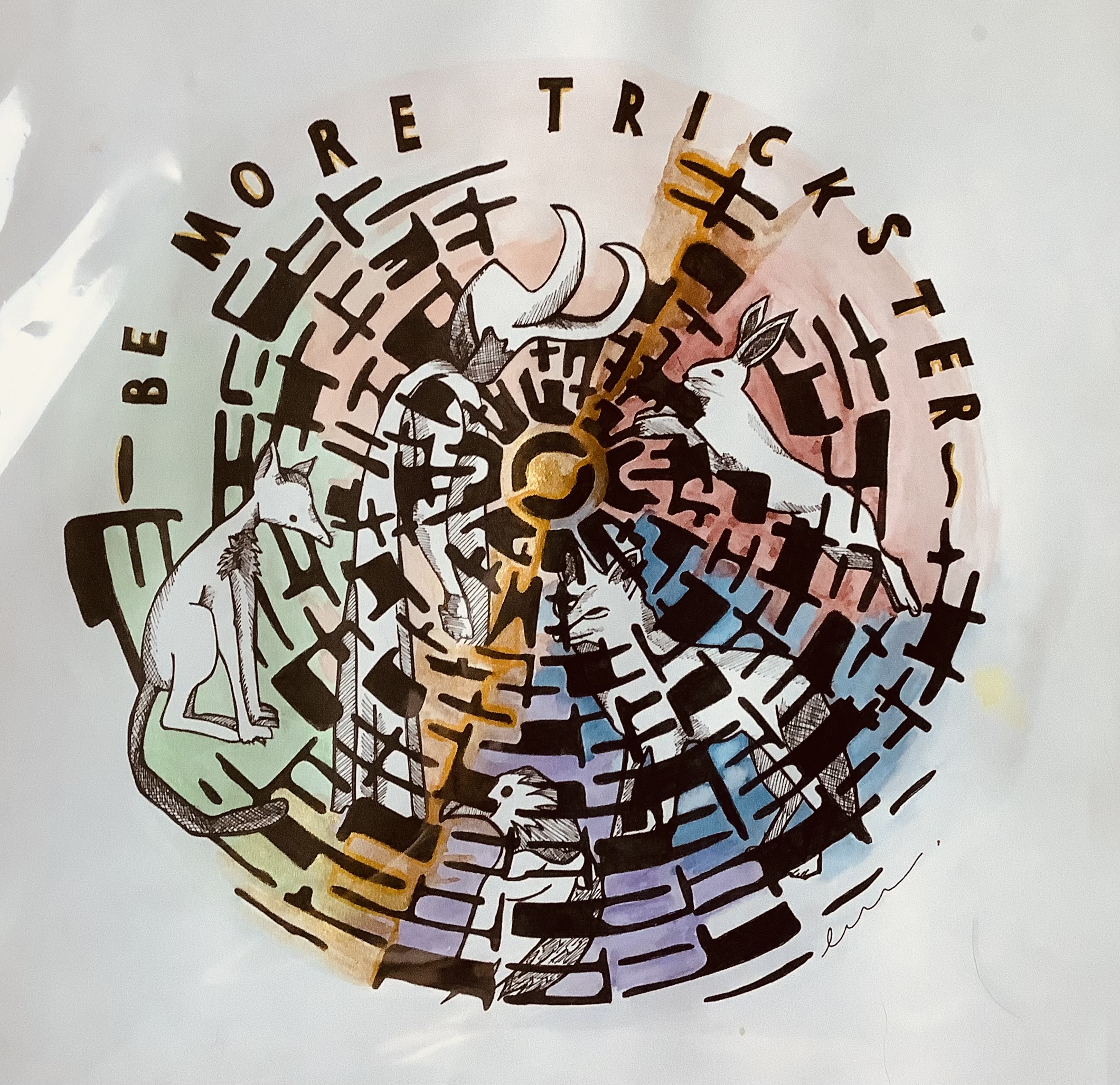
Sunday Papers turned 21 last month and so I thought I would look back through some of the themes that have emerged over the years and the 950 or so blogposts. The figure of the trickster has been a restless but pretty constant companion, sometimes provocateur, sometimes guide, sometimes the shadow in the corner when certainty threatens to harden. Journeying back through the archive, I notice how my use of “trickster” has itself been tricky: adapting, morphing, much as the trickster does, to the movements and moods of the times and the evolving questions of church, systems, and cultural renewal. Gathering these together we can see her different guises and learn a few lessons along the way. 

Trickster as Disruption: Stirring the Comfortable

In the early days, trickster arrived in my writing as disturbance. Rooted in the stories of Hyde and the many mythic mischief makers, trickster embodied the kind of holy mischief needed to unsettle our ecclesial complacency. I wrote about the discomfort, border-walking, question-posing, edge-dwelling that trickster brings to stagnant communities. Trickster was the strange guest, misunderstood and sometimes unwelcome, who moved the conversation from comfort to confrontation (which probably also reflects my life stage at the time).

There is a necessary place for this sort of energy in organisations and systems facing calcification, when the status quo is defended with greater force than the call of the gospel or the pulse of life. In this stage, trickster is a mirror to stuckness and a living question mark for institutional “wisdom.” Trickster’s value here is not so much in having answers, but in disrupting, and simply tearing open space for something unexpected to begin.

Trickster as Emergence: The Playful Edge of Creativity

As time went on, my engagement with emergence deepened. Trickster moved from being merely an irritant to something generative, a figure not only to challenge boundaries, but to create new ones, or dissolve them long enough for new forms to emerge. The conversations about “emergent church” and “grace spaces” that led to Here Be Dragons revealed the need to dwell not just at the border, but also in the middle, where the boundaries blur and creation teems.

Here, trickster’s play becomes vital. The themes shifted: less about simply sabotaging structure, more about risking improvisation, learning from ambiguity, and allowing the uncomfortable laughter that comes when certainty recedes. Surprisingly, trickster’s lessons in play, parody, and improvisation offered a source of hope and resilience, essential for organisations learning to let go of the need for control and to make space for emergence.

Trickster as Companion: Deep Listening and Systemic Renewal

In more recent years, a subtler, deeper trickster has come to the fore. No longer relegated only to the borders or eruptions of crisis, this trickster appears as a companion in the slow, ongoing renewals of system and spirit. I found myself drawing on trickster stories not just for their disruptive potential, but as a wisdom tradition for co-creative leadership, deep listening, and navigating unpredictable terrain.

Now, trickster is invoked to remind leaders and communities that true transformation happens in liminal space, between the old and not-yet, in stories shared, questions asked, and boundaries re-imagined. The work is less about subversion for its own sake and more about fostering an adaptive, generative ecology where fresh forms of church and meaning can be discovered. Trickster joins the circle as both risk and companion: an invitation to stay open, responsive, and alive to the wild grace of emergence.

Using Trickster in Organisational Change: Practical Insights

Looking back, I see that the trickster’s role shifts with the system’s need:

• When a community is stuck or stagnant, trickster shakes the ground, challenging, exposing, disrupting.

• In seasons of uncertainty or growth, trickster invites play, risk, and improvisational imagination needed for the new to emerge.

• As change matures and practice deepens, trickster becomes a reminder to listen to what emerges with humility, to hold structures lightly, and to let stories and edges lead the way toward renewal.

In organisational and systemic change, then, trickster is not a one-off tool but a shape-shifter morphing between clown, sage, and the voice that asks the question no one else dares name. The journey through these stages is itself trickster-like a reminder that creative transformation is rarely linear, often surprising, and always a bit mischievous. So I think we let trickster take us further, rooting practice in tricksteresque space where the grace of emergence calls leaders and communities not just to survive disruption, but to welcome it as the soil in which new worlds may be planted. And in this, perhaps, the trickster makes our world anew, again and again.


As part of Alchemy At The Edge I’m thinking of developing three webinars based on these three trickster stages. If you are interested in this please leave me a comment or email me richard@alchemyedge.co.uk 

(The image was my leaving present from the wonderful Emma Richardson.) 

Momentum You Can See and Feel

In the second episode of Freddie Flintoff’s Field of Dreams The Ultimate Test, down in Newton Heath, Manchester, there’s a key moment. The rebuilding of the clubhouse has slowed; they had lost the lease document and Freddie talks about how nothing had changed since the last visit. Despite this they still get a bunch of young people to show up and start playing. (I’m yet to see if the slow clubhouse progress impacts the wider project). On the Bottle estate, the young people a to move quickly, They want to play proper games with the hard ball, not just knockabouts. They crave the test, the experience of doing the real thing.
It’s a reminder that change often hangs on two surprisingly simple tools: visibility and momentum.

John Kotter, one of the most over quoted figures in change theory, makes much of “short term wins”. His point isn’t just about morale boosting milestones; it’s about the need for evidence. Communities, like individuals, need to see difference made real. A patched fence, a working clubhouse, or that first hard?ball match. Sightlines anchor belief. Without them, the best written vision documents drift into abstraction.
Although I’m yet to watch the rest of the series I suspect in Newton Heath, the clubhouse will be more than bricks and mortar it’s will be a symbol. The slow progress at that site will test patience, while the practice showed possibility but how will the quick and slow play out? (UPDATE just watched the next episode and they had to move to a new venue which I guess kind of proves my point)

At the Northern Mission Centre, we found a parallel when we designed our Speed Incubator. We built it on the principle that pressing the accelerator early helps overcome inertia. Speed matters. Think of it like cycling: harder to push off from standstill, easier once you’re rolling.
In community development, momentum is not about racing ahead irresponsibly. It’s about creating experiences of movement, moments where participants feel the breeze of progress. People learn with their bodies as well as their minds. That first product launched, that story told at a community meal, that visible experiment tried in public, these generate a sense of speed you can feel.
Visible + Experiential = Trust. Bring visibility and speed together, and you start to rebuild trust in the possibility of change. That’s what Freddie Flintoff stumbled into on the Bottle estate. The young people didn’t simply hear him talk about cricket or watch a clubhouse crawl towards completion. They stepped into a match where the sound and sting of the hard ball told them: this is real.
Likewise, our Speed Incubator showed that the feel of “something happening” matters as much as strategy. Prototypes and pilots, no matter how rough, are worth more than perfect plans delayed. The eye sees, the body feels, and the imagination follows.
Lessons for Local Change
For those working in churches, charities and neighbourhood initiatives, the lessons are clear:
• Create visible wins that people can point to. Paint it, patch it, play it, even if it’s not perfect.
• Design for speed experiences that shift momentum. Small risks, real experiments, fast follow?through.
• Remember that change is not only told in documents or meetings, it is embodied in what people see and feel together.
That’s where belief grows. Change is contagious when it shows itself in sights and in motion.